
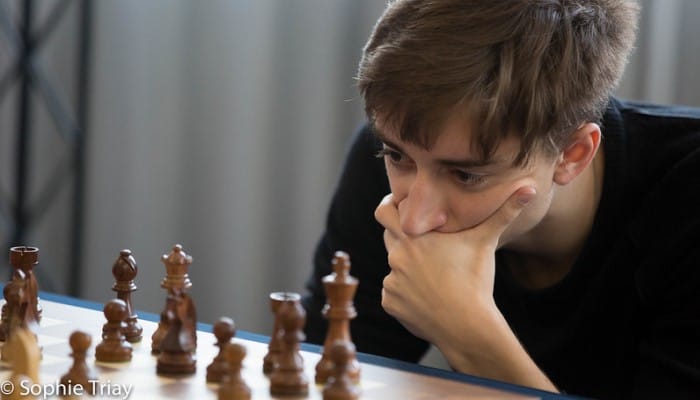
Daniil Dubov argues that unconventional moves are not a gamble, but a strategic tool. We explore how the Russian grandmaster is redefining the image of the chess player through the energy of his pieces and complex openings.
Daniil Dubov has long been regarded as more than just a strong Russian grandmaster. His name has become synonymous with a style of chess in which precision and memory are important, but so is the willingness to force an opponent into a difficult choice. In this sense, Dubov is interesting even to those who rarely follow tournament standings: he demonstrates that taking risks in chess need not be a gamble, but rather a way to think more deeply.
Today, chess extends far beyond the classic board: a game quickly leads to post-game analysis, short videos, apps, and debates about the quality of decisions. Dubov’s style relies not on external factors but on the position itself: he seeks out the energy of the pieces, hidden resources, and moves that prevent his opponent from playing by habit. Therefore, his style is best understood through risk, tempo, and the ability to complicate the game without losing its meaning.
How Dubov’s risk-taking differs from chess bravado
In chess, risk is often confused with the desire to surprise at any cost. With Dubov, it works differently. His unconventional decisions are usually not about making a flashy move, but about trying to change the nature of the position: forcing the opponent to think for themselves, straying from the well-trodden path, and opening up the board for a long struggle.
This approach is particularly noticeable in the opening. Dubov may choose a line where the computer evaluation doesn’t always look impressive, but at the board, it’s unpleasant for a human to search for exact answers. In rapid chess, this quality becomes even more important: time is short, and the cost of every inaccurate move increases.
For him, risk does not negate calculation. On the contrary, it requires even more calculation, because a non-standard position does not forgive a superficial understanding. A player must know where an idea ends and overconfidence begins.
The 2018 rapid championship as a testament to his style
Dubov’s victory at the 2018 World Rapid Chess Championship served as a significant indicator of his caliber. Rapid chess is unlike classical chess: there is less time to evaluate variations, more pressure, and positions frequently arise where one must rely on intuition and experience.
It was precisely in this format that his style shone most brightly. Dubov is capable not only of finding a beautiful idea but also of sustaining it with a series of precise moves. In rapid chess, you cannot build success on a single brilliant move. You must constantly maintain the tempo, stay in the fight, and sense when your opponent begins to waver.
This victory is also important because it does not look like a random flash of brilliance. It fits into the overall image of a chess player who feels comfortable in complex positions. Where many seek simplification, Dubov often chooses a continuation that brings the game to life.
Why his opening ideas are discussed separately
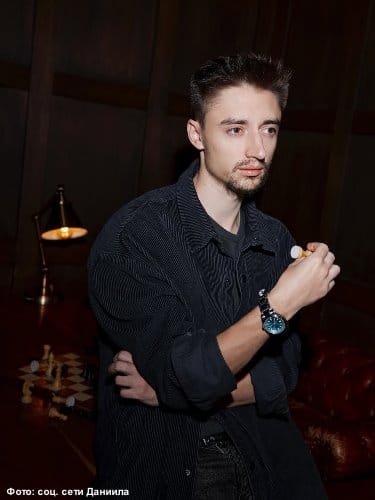
For a strong grandmaster, opening preparation is usually hidden from the viewer. Only the opening moves are visible, while the vast bulk of the work remains behind the scenes. With Dubov, it’s different: some of his ideas become a spectacle in themselves because they challenge conventional views of familiar patterns.
He doesn’t just memorize variations. In his games, one often senses an attempt to reframe the question: what should the pieces do, where is a weakness not really a weakness, which pawn can be sacrificed for the sake of activity. This logic makes the opening not a mechanical start to the game, but a full-fledged part of his personal style.
This is especially valuable for the viewer. Even if a person doesn’t know the long variations, they see the main point: one player proposes a position where the board begins to live differently. Dubov turns the opening into a conversation, not a memory test.
Working with Carlsen and the school of big decisions
Dubov’s involvement in preparing Magnus Carlsen for his world championship matches clearly illustrates why he is valued beyond his personal results. The world champion’s team doesn’t just need strong chess players. It needs people capable of proposing ideas that will stand up to scrutiny at the highest level.
Such work requires a special mindset. One must understand not only the moves, but also the psychology of the match, the opponent’s habits, and the moments when an unexpected opening choice can change the tone of the entire game. In this sense, Dubov proved valuable precisely as a generator of complex and dynamic solutions.
This is also important for his own image. He is perceived not only as a performer at the board, but also as a chess author. His ideas can exist independently of a specific tournament and influence how other grandmasters view a position.
A Russian grandmaster without a stereotypical image
The Russian chess tradition is often associated with a focus on fundamentals, a school of calculation, and a deep respect for the classics. Dubov does not dispute this tradition, but he adds a different perspective to it. He demonstrates that the legacy of a strong school does not have to look the same.
His play shows respect for precision, but no fear of chaos. He may accept a position where the pawn structure is compromised, provided his pieces gain activity. He may abandon a comfortable equality if he sees a chance to create a practical problem. He may choose a line that looks strange until it becomes clear what task it solves.
This style broadens our understanding of the Russian grandmaster. He is not just a player who knows more theory and calculates variations longer. He is also a creator of ideas, capable of making a game recognizable by its character.
Why Dubov’s games are worth watching
Interest in Dubov isn’t driven solely by his results. While victories are always important in sports, chess has a unique quality: spectators return to a player if his games offer food for thought. With Dubov, one often wants to revisit such games because it’s difficult to immediately distinguish risk from depth in them.
His chess teaches a simple lesson: unconventionality only makes sense when it is backed by an understanding of the position. A beautiful move is quickly forgotten on its own. But a move that changes the direction of the game and forces the opponent to think differently stays in the memory.
That is why Dubov is important not as an eccentric hero of individual tournaments, but as an example of a chess player who makes the game less predictable. He reminds us that even in an era of intensive preparation and computer analysis, there remains room at the board for human choice, boldness, and a distinctive style.