
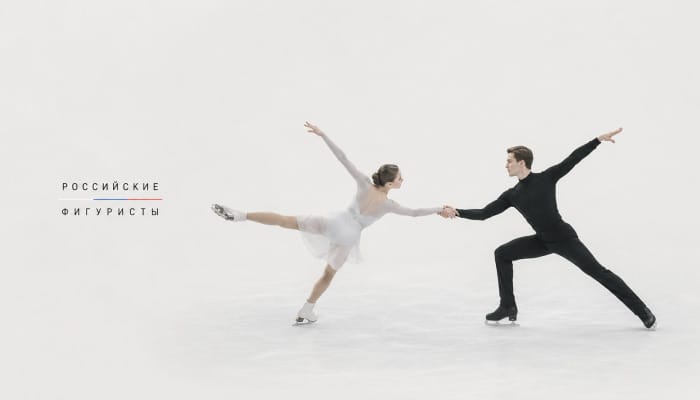
Russian figure skaters may be without international competitions, but they’re not out of shape. Here’s what their season looks like right now: from jump training to the psychology of the hiatus.
Figure skating rarely progresses in silence. Even when athletes aren’t competing in the usual circuit of international events, they’re still surrounded by training, test skates, domestic competitions, program development, and fans’ expectations. A hiatus on the international stage doesn’t cancel out the sport, but it changes its rhythm: instead of comparing themselves to global rivals, the ability to maintain their level without constant external scrutiny becomes more important.
The way viewers follow the season is changing too: they watch recorded performances more often, discuss scores within the country, and compare programs not by medals but by the quality of the skating. The legacy of Russian figure skaters remains on the ice: in the precision of their jumps, the speed of their spins, their choreography, and their ability to maintain a competitive edge without the usual international benchmarks. Therefore, the main question is not who makes the biggest splash in the news, but how athletes maintain their internal standards.
The domestic competition schedule has become the primary measure of form
When international competitions are scarce or not accessible to everyone, domestic tournaments cease to be merely a preparatory step. They become a full-fledged stage where skaters test their programs, the consistency of their jumps, and their ability to perform under pressure. For a figure skater, this is not a practice run, but a rare opportunity to feel the competitive thrill.
Domestic competition series are especially important. They set the rhythm of the season: short program, free skate, waiting for scores, travel, recovery, and new training. Without this, an athlete quickly loses the feel for competition, even if they perform complex elements in training.
The difference lies only in the scale of comparison. Previously, an athlete constantly saw themselves alongside the best from other schools; now they more often compare their progress with their own past performances and their closest competitors at home. This makes internal competition tougher than it appears from the outside.
Difficult jumps require consistency, not just flashiness
In Russian figure skating, there is much talk of quadruple jumps and the triple Axel, but the hiatus in the international calendar shows that what matters is not simply mastering the element, but the ability to repeat it under varying conditions. A single successful jump in practice does not equate to consistency in a program.
Coaches are forced to calculate the training load more carefully. Without the usual international schedule, it’s easy to overload an athlete with test skates or, conversely, to deprive them of competitive pressure. In both cases, the key quality of an elite figure skater suffers: the ability to execute an element not in the ideal quiet of practice, but after a warm-up, the anticipation of taking the ice, and a mistake in the previous sequence.
Therefore, maintaining form is built around consistency. If an athlete maintains the same level of performance for months, this is more valuable than a one-time record on good ice. In figure skating, maturity often looks not spectacular, but mundane: the jump was landed again, the spin was completed again, the program didn’t fall apart by the end again.
Programs last longer but require fine-tuning
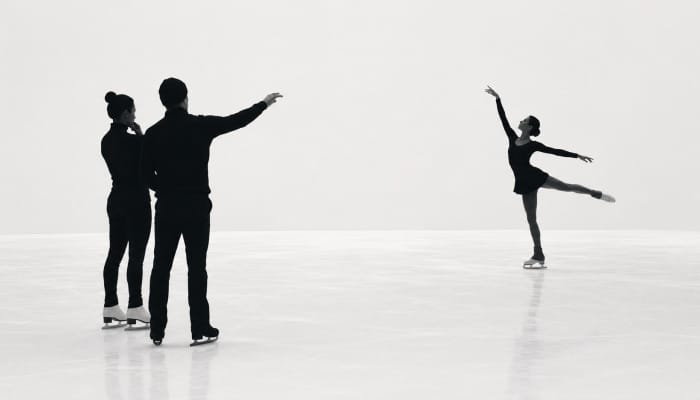
Without a packed international competition schedule, a program has more time for refinement. Choreographers can shift the focus, rearrange combinations, and enhance transitions between elements. On the one hand, this is an advantage: the routine matures alongside the skater and doesn’t look unpolished.
On the other hand, this situation has a hidden complexity. A program that is skated for a long time within a single circuit can start to feel comfortable too soon. It is already familiar to the judges, the audience, and the skater themselves. At this point, it is easy to confuse habit with quality.
The best figure skaters use a break not to preserve, but to refine. They don’t just keep the successful elements; they look for where to add speed, where to remove unnecessary movement, and where to emphasize a musical phrase. This way, the program stays fresh, even if it’s been seen many times.
Internal competition keeps skaters on their toes more than it seems
Russian figure skating is far from lacking in competition. The women’s singles field is highly competitive; in the men’s division, the value of clean runs is on the rise; and in pairs and ice dancing, the quality of skating and the trust between partners are key factors. Within the country, athletes still have to prove their level; it’s just that the audience for comparison has changed.
This competition plays out on several fronts:
- young skaters challenge with the complexity and freshness of their programs;
- experienced skaters respond with the quality of their skating and their ability to execute clean runs;
- coaching teams compete not only on elements but also on preseason preparation;
- domestic judging makes every mistake public.
This rhythm doesn’t fully replace the international arena, but it doesn’t let athletes relax. The domestic season becomes a test not of status, but of daily readiness.
The Psychology of a break: how not to lose the thrill of a major competition
The most challenging aspect of such a break isn’t technical—it’s psychological. A figure skater may maintain their jumps, form, and program, but they’ll still miss the thrill of a major international competition. There’s a different warm-up, a different audience, different judges, and a different level of competition from strong rivals.
Coaches have to simulate the pressure. They intensify practice runs, change the order of skaters, and create situations where the athlete doesn’t know in advance exactly how the day will unfold. This isn’t for show, but for the nervous system: it needs to remember that a performance can be uncomfortable, noisy, and unpredictable.
Mature skaters are distinguished by the fact that they don’t wait for the perfect conditions. They know how to step onto the ice and do their job, even if the season is organized unusually. In this sense, the hiatus has become a test of character no less than of technique.
The road back to major competition begins in training
When an athlete goes a long time without the familiar international competition schedule, it’s easy to imagine a return as a sudden leap onto a new stage. In reality, it begins much earlier: in the daily work on speed, endurance, the consistency of combinations, and the precision of edge work. A major competition merely showcases what has been built up over the months leading up to it.
It is important for Russian figure skaters to maintain not only their elements but also their sense of scale. Domestic victories are valuable, but they must not become a ceiling. True form is evident when an athlete continues to raise the bar, even if the next test seems familiar.
The pause in the international calendar has altered the usual path, but it has not negated the main principle of figure skating: skill is maintained through consistent practice. Those who can maintain quality without constant external distractions get the chance to step onto the big ice not from scratch, but with an already established inner foundation.