
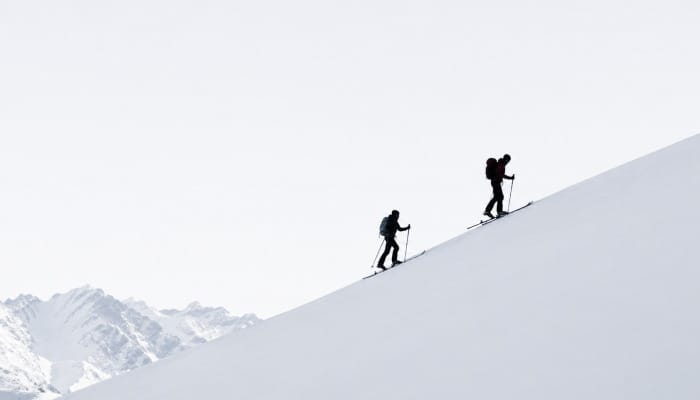
Ski mountaineering requires athletes to be able to climb mountains, switch binding modes, use crampons, and keep their cool when it would be wiser to slow down.
It’s easy to mistake ski mountaineering for just another type of cross-country skiing, but this similarity is deceptive. Here, the athlete isn’t just running on snow: they climb mountains on skis, adjust their bindings, take off and put on crampons, navigate technical sections, and seek speed again where common sense suggests slowing down.
Complex disciplines become clearer when the viewer starts watching not only the finish line, but also how the athlete conserves energy on the ascent and switches modes. In ski mountaineering, attentiveness brings you back to the essentials—pace, breathing, and economy of movement with every meter climbed.
The ascent is more important here than a beautiful descent
In alpine skiing, spectators usually expect turns, downhill speed, and risk on the course. In ski mountaineering, the main dramatic moment often occurs during the ascent. The athlete battles the slope, the snow, the altitude, and their own heart rate.
Vertical speed differs from the speed one is used to on flat ground. Here, you can’t simply pick up the pace, as you would at the finish line of a ski race. Excessive movement quickly drains your energy, and a pace that’s too aggressive in the opening minutes comes back to haunt you as heavy breathing toward the decisive stretch.
That’s why a strong ski mountaineer doesn’t just look resilient. He seems almost economical: he doesn’t jerk his torso, doesn’t waste his arms unnecessarily, and doesn’t break his rhythm where he can cover the terrain more smoothly. In this sport, beauty is often found in the absence of excess.
Kamus, bindings, and split seconds during transitions
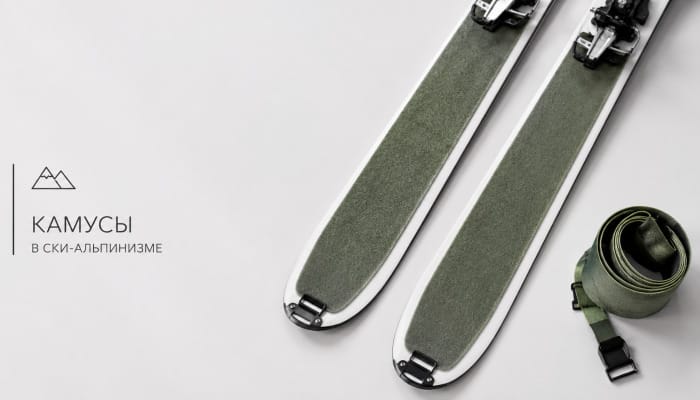
Ski mountaineering relies on a combination of physics and technique. Kamus help the skis grip the snow during the ascent, but they must be quickly removed before the descent. Bindings and boots switch modes, and any delay in the transition zone translates into lost seconds.
To the spectator, this may seem like a minor detail. The athlete bends down, clicks the binding, adjusts their gear, and continues on. But it is precisely these actions that distinguish a smooth race from a choppy one. When the transition is executed calmly, the athlete saves not only time but also their inner composure.
In this respect, ski mountaineering is closer to biathlon than it seems. In biathlon, shooting stops the running portion and requires an instant mental shift. Here, transitions do the same thing: the athlete must quickly exit one mode and immediately enter another without losing their rhythm.
Why Russian winter sports need this format
Russian winter sports have traditionally excelled in disciplines where endurance, patience, and the ability to handle pressure are valued. Cross-country skiing, biathlon, speed skating, short track, and figure skating have developed different training approaches, but almost everywhere the ability to handle pressure in the moment is crucial. Ski mountaineering adds a mountain element and the ability to navigate terrain to this mix.
For Russia, this discipline is interesting not for its mass appeal, but for the new type of athlete it requires. Here, a single cross-country base or a single alpine skiing technique is not enough. What is needed is a person who remains equally calm about the ascent, the descent, the equipment, and changing conditions on the course.
That is precisely why the emergence of notable Russian names in ski mountaineering is seen not as a coincidence, but as an expansion of the winter sports landscape. This sport demonstrates that speed can be born not only in a stadium or on a cross-country track, but also on a slope, where every meter of ascent requires a separate decision.
Nikita Filippov: an accessible hero of a niche sport
When a little-known sport breaks out of its niche, it needs an athlete who helps viewers understand the rules of the game.
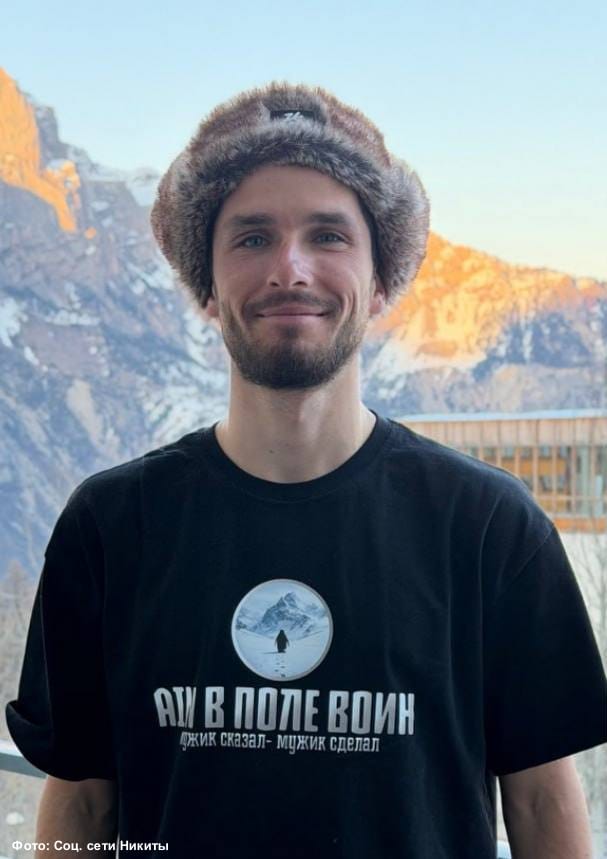
In Russian ski mountaineering, Nikita Filippov has gradually taken on this role. His name helps translate the discipline from the language of mountain specialists into the language of general sports interest. Filippov is important not only for his results. He embodies the very model of a ski mountaineer: lightness on the ascent, readiness to work in short bursts of intensity, precision in switching modes, and composure when the course forces him to make mistakes. Through an athlete like him, the sport ceases to be an exotic curiosity.
This is especially valuable for a niche discipline. Until the spectator knows all the rules, they latch onto the athlete’s persona. First, they memorize the face and surname; then they begin to distinguish between disciplines; and finally, they notice why the transition zone can be just as important as the final sprint.
The spectator appeal of ski mountaineering in a short drama
Modern sports are increasingly seeking formats where the tension is immediately apparent. Ski mountaineering fits well into this logic. Here, the objective is clear: climb, switch gears, navigate a technical section, and maintain speed. Even without a deep understanding of the rules, the viewer can sense the struggle between the body and the slope.
Short disciplines are particularly compelling. There is no long wait for the outcome, and a mistake during a transition or an incorrect climbing rhythm immediately changes the course of the race. The athlete cannot hide behind the total distance. Every movement is too noticeable.
But the main value of ski mountaineering isn’t that it has become easier to watch. It reminds us that winter sports aren’t just about speed downhill or kilometers across the flat. Sometimes the truest challenge lies in the ascent, where victory begins not with a burst of speed, but with the ability to avoid taking a single unnecessary step.