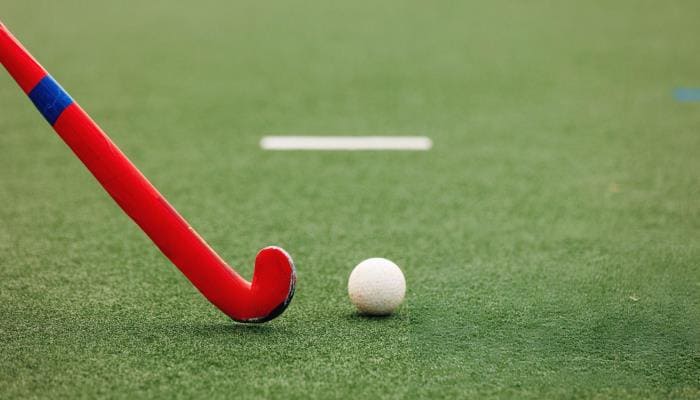
Field hockey is an Olympic sport with a history dating back 4,000 years. It is the ancestor of ice hockey, played with sticks and a ball on artificial turf.
#FieldHockey #SummerSports #OlympicSport
When an Englishman says «hockey», he almost certainly means not the clang of a puck against the boards, but the clatter of a ball on artificial turf. Field hockey is not the younger brother, but rather the venerable ancestor of the ice hockey we know. It is a dynamic team sport with a rich history and its own heroes.
History: from the pyramids to the Olympics
Surprisingly, the first evidence of a game resembling hockey dates back to Ancient Egypt. An image dating back about 4,000 years was found in the tombs of the Nile Valley, depicting people with sticks and a ball in dynamic action.
The modern name of the game probably comes from the Old French word «hoquet» — a shepherd’s crook. Shepherds used these crooks to chase homemade balls across the meadows. However, field hockey gained the status of an organized sport in Victorian England in the mid-19th century.
– 1861: The world’s first hockey club is founded in London.
– 1908: Field hockey was included in the program of the Olympic Games in London.
– India’s Olympic triumph: For many years, the dominant force in this sport was the Indian men’s team, which won numerous Olympic gold medals.
– Women’s debut: Women’s field hockey made its Olympic debut in 1980 in Moscow, where Soviet athletes immediately won bronze medals.
Interesting fact! In the 19th century, field hockey teams did not have names, but were distinguished only by the color of their uniforms. The draw was conducted in an original way: players pulled red or blue hats out of a bag, thus determining their team.
Features and key rules
The essence of the game is simple: two teams of 11 players try to score a goal in the opponent’s goal (3.66 m by 2.14 m) using sticks. The main condition is that all movements on the field must be done by running.
Main prohibitions and differences:
- Only the flat side of the stick may be used. Playing with the curved side is prohibited.
- Highly raised stick. The stick may not be raised above shoulder level—this is dangerous for those around you.
- Body play. Only the goalkeeper may touch the ball with any part of their body within their goal area.
- Goals can only be scored from the «striking circle». For a goal to count, the attack must be started from a special semicircle in front of the goal.
- Referee cards: green (warning), yellow (2-5 minute suspension), red (disqualification for the rest of the match).
Special elements:
- Penalty corner (corner) — awarded for a foul by the defending team in their penalty area. This is one of the most spectacular moments of the game.
- Penalty kick — taken from a spot 6.4 meters from the goal.
Interesting fact! The speed of the ball after a strong hit (click) by professional players can exceed 200 km/h. This makes it one of the fastest pieces of equipment in team sports.
The evolution of equipment: from wood to composites
Modern field hockey is no longer played entirely on grass – top-level competitions are held on artificial turf, which allows players to develop high speeds.
The stick has also undergone a revolution:
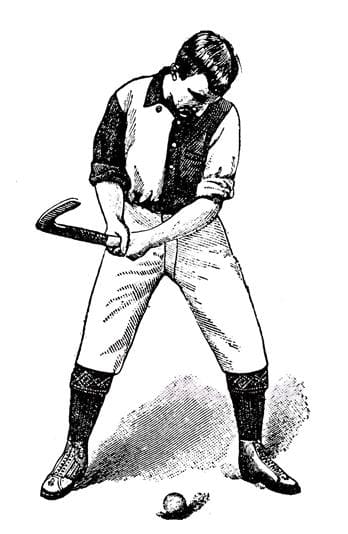
- 19th century: massive wooden sticks, most often made of mulberry wood.
- 1990s: the appearance of sticks with aluminum handles to increase striking power.
- Today: high-tech clubs made of composite materials (carbon, Kevlar, fiberglass). They combine incredible lightness, strength, and elasticity, allowing athletes to precisely control the ball and deliver powerful shots.
Field hockey in Russia and its varieties
For a long time, India was the undisputed queen of field hockey, especially in men’s competitions, where it dominated the Olympics for many years. Today, teams such as the Netherlands, Belgium, Australia, Germany, and Argentina (in women’s tournaments) are challenging its leadership.
Russian field hockey, although not as popular as ice hockey, has its own achievements:
- At the 1980 Olympics on home soil, the USSR women’s team won bronze, and the men’s team also finished third.
- The teams regularly compete for prizes at European championships.
- In 2018, the Russian team won the prestigious Hockey Series Open tournament.
- In 2025, the Russian men’s team took first place at the Nations Cup international tournament.
In addition to the classic outdoor game, indoor hockey is also widely played. It is played indoors by teams of six players on a smaller field, which makes the game more dynamic and fast-paced.
Interesting fact! Field hockey is the second most popular sport in the world after soccer in terms of the number of players (over 30 million). It is hugely popular in Europe, Asia, Australia, and Africa.
Where to start?
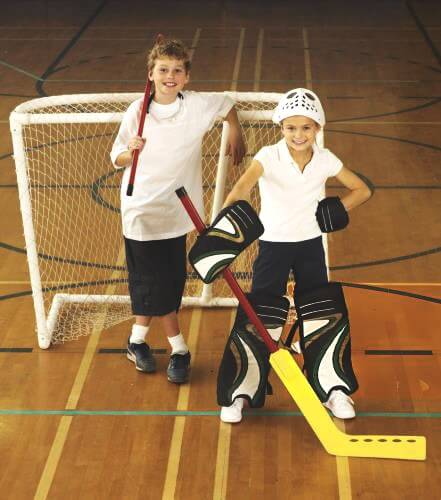
The optimal age to start is 6–8 years old. At this age, children are coordinated enough to master the stick and perform basic exercises.
Many clubs offer early development groups (from 4–5 years old), where the emphasis is on general physical training and stick games. You can also start as a teenager — there are groups for beginners aged 12+.
The field hockey season traditionally runs from April to October on outdoor fields, but modern sports complexes with artificial turf allow for year-round training. In winter, classes are often moved to indoor arenas or held in halls (indoor hockey).
Field hockey
Conclusion
Field hockey is not just the historical predecessor of ice hockey, but a rich and independent sporting universe in its own right. Its history, rooted in ancient civilizations, and its rapid evolution – from shepherd’s crooks on English meadows to high-tech composite sticks on artificial fields – are no less impressive than the dynamics of the game itself.
It is a sport in which technical finesse, quick thinking, and flawless team strategy are on par with physical fitness. Despite the fact that in Russia it is overshadowed by its ice-based «younger brother», Russian athletes continue to represent their country with dignity on the international stage, proving that there are no secondary disciplines when it comes to mastery.